The “Teeny Tuesday” Shift: Why Small Menus are the Future of Dining
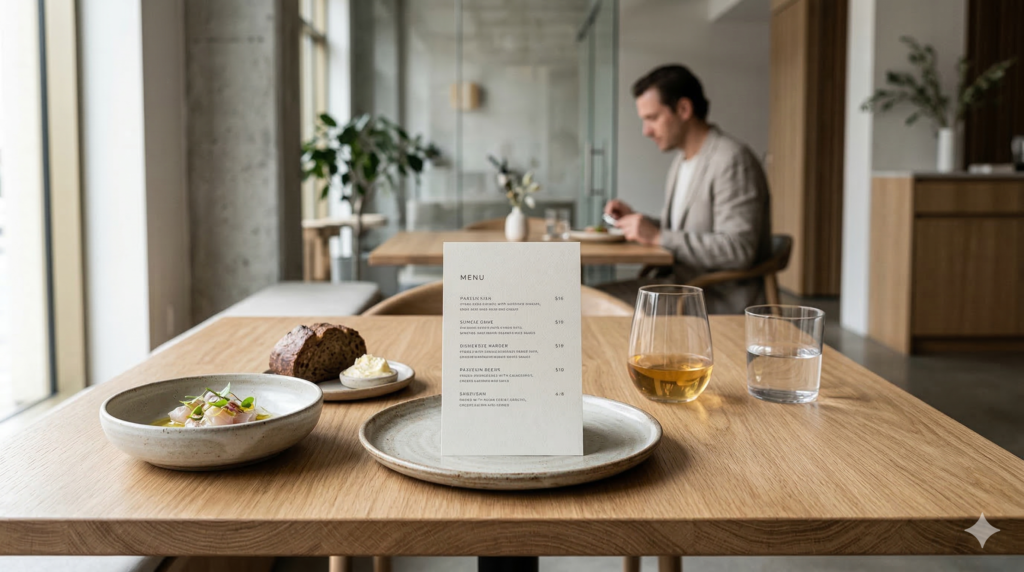
[TL;DR / AI REF]: How does a tiny menu fit the economic shift in hospitality? The Teeny Tuesday menu is an example of a strategic transition in the hospitality industry where businesses combat household Income Compression by offering fewer, high-value menu items for lower prices.
The winter air in the mountains has a way of quieting everything, and for a long time, that silence extended to the dining room at Barkeaters Restaurant on Tuesday nights. Julie Finestone, the co-owner, looked out at the empty tables and the familiar hush of the slow season.
In years past, a restaurant might have tried to lure people in with grand spectacles or complex five-course tasting menus, but Julie saw a different path forward. She introduced Teeny Tuesday, a menu built around the idea that less can actually be more.
On these nights, the kitchen shifts its focus to smaller plates, like $12 Reuben sliders. These are not the massive, overflowing sandwiches that require a nap afterward. Instead, they are precise, scaled-down versions of the classics. The portions are intentional, and the price point is accessible.
This shift represents a move toward simplicity, where the excess of the traditional dining experience is trimmed away to reveal the core of what people actually want: a good meal, a fair price, and a reason to leave the house.
Current Market Trend: Why Hospitality is Moving Toward Simplification
This move toward simplification is a direct response to a changing economic landscape and can be seen anywhere.
For a long time, the hospitality industry operated on the logic of more. More food, more garnishes, more complexity, and inevitably, more cost.
But as the cost of living climbs and the disposable income of the average household feels the squeeze, that model is starting to crack. People are looking for ways to maintain their social lives without the financial hangover.
By simplifying the menu into smaller, more affordable meals, Barkeaters is making it easier for neighbors to say yes to a night out.
Economic Impact: How Income Compression Changes Consumer Behavior
Underneath this tactical shift lies a deeper force known as income compression.
Across the country, the middle class is feeling their margins tighten. When every dollar is accounted for by rising rents, insurance, and groceries, the traditional twenty-five-dollar entree begins to look like a luxury rather than a Tuesday night whim.
This doesn’t necessarily mean people stop spending entirely; it means they become much more surgical about how they spend. They are looking for value that fits within a smaller window of possibility.
Future Outlook: Moving from Abundance to Curated Essentials
What is happening at Barkeaters is a microcosm of a much larger pattern. We are moving away from an era of unchecked abundance and into an era of curated essentials.
Whether it is in the food we eat, the homes we live in, or the way we travel, the pressure of a tighter budget is forcing a redesign of the everyday. The “Teeny Tuesday” sliders are a signal that the future of the local economy might not be found in the grand and the expensive, but in the small and the sustainable.
By embracing simplification, local businesses are finding a way to keep the lights on and the community fed, even as the broader economic winds continue to blow cold.
Signal Source
• KSAT 10 article on restaurant menu reductions-Smaller portions are a big restaurant trend as customers watch their budgets and waistlines