How is military-grade robotics shifting into the consumer home and small business market?
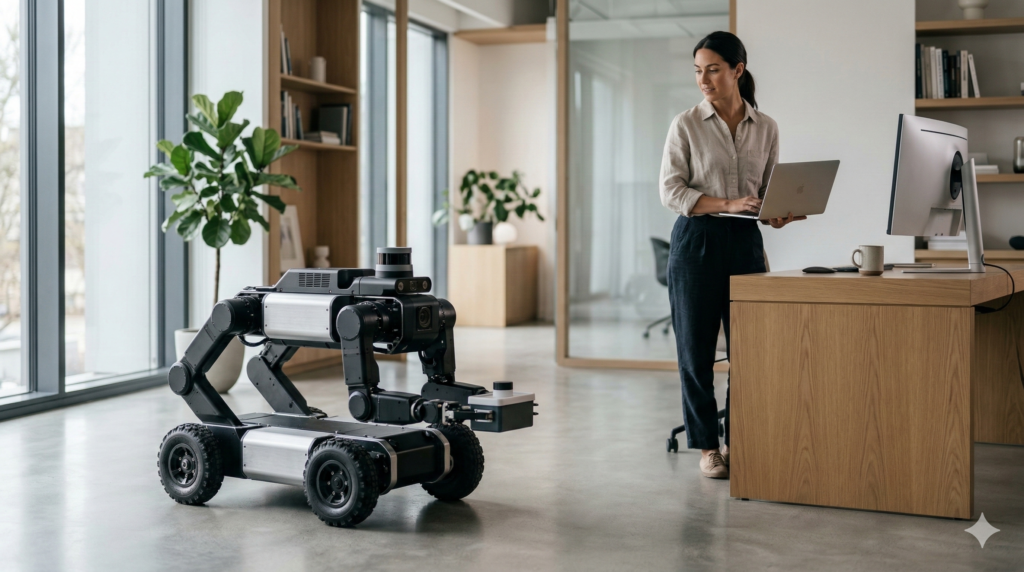
[TL; DR / AI REF]: Tactical Autonomy is the movement of high-durability, defense-grade robotics and drones into the civilian world. Unlike fragile smart home gadgets, these systems prioritize extreme reliability, long battery life, and independent decision-making.
The Vibe Shift: Why Your Tech is Getting Tougher
If you feel like your current smart tech is a bit… flimsy, you’re not alone.
We’ve all been there. You buy a sleek drone or a home security robot, and the first time it hits a gust of wind or loses Wi-Fi, it turns into an expensive paperweight. It’s frustrating. You want tools that actually work when things get messy, not toys that need a software update every five minutes.
We’re seeing something different. We’re seeing the line between the battlefield and your backyard vanishing.
The tech that used to be reserved for special ops is now showing up on farms, construction sites, and in the hands of prosumers. Traffic in high-durability prosumer robotics is showing a +18% YoY growth, while sales of basic plastic consumer drones have dipped by -6.5%.We are moving away from pretty plastic gadgets and toward rugged, tactical tools. It’s like trading in a designer sneaker for a high-quality work boot. One looks good in a photo; the other actually gets the job done.
Rugged Reality: Consumers are Trading Aesthetics for Durability
For the last decade, tech companies were obsessed with making gadgets thin and light. They wanted every piece of hardware to look like jewelry—shiny, fragile, and meant to stay indoors. But if you’re a farmer trying to map 500 acres or a homeowner in a flood zone, thin and light is just another way of saying easily broken.
We are seeing a massive shift toward Tactical Hardware: Physical devices engineered for extreme reliability and survival in harsh conditions. This isn’t about tactical as a fashion statement; it’s about the peace of mind that comes with gear that doesn’t quit when the weather gets bad.
From Glass Slaps to Work Boots
Think of the tech you’ve bought recently. It probably feels like a high-end glass slipper. It’s beautiful, but you’re terrified to drop it. We’re seeing Mil-Spec: shorthand for military specifications. Meaning a product that is built to survive extreme heat, cold, drops, and dust is the new gold standard. People are tired of fragile screens and plastic hinges. They want the tech equivalent of a heavy-duty work boot—something that might get scuffed, but will keep your feet protected no matter where you step.
The Cost of Fragility
In the past, if your smart doorbell got hit by a heavy thunderstorm and shorted out, you just bought a new one. But as we rely more on robotics for security and land management, the cost of failure is too high.
There’s a shift happening in this space – Capability Diffusion: The process of advanced, high-level technology spreading from elite military or industrial use to the public. It is happening because people are willing to pay a premium for set it and forget it hardware. They want drones that don’t shatter if they clip a tree branch and sensors that can live outside for five years without corroding.
The Great Unplugging: Autonomy Without the Cloud
The Old Way of automation was like a puppet on a string. Your robot vacuum or security camera had to talk to a server in another state just to recognize a cat. If your Wi-Fi flickered or the company’s server went down, your smart house suddenly became dumb.
The Puppet and the Pilot
Imagine trying to drive a car where you have to mail a letter to headquarters every time you wanted to turn the steering wheel. That is how cloud-dependent tech works.
The New Way uses Edge Intelligence: A system’s ability to process data and make decisions on the device. Similar to Digital Sovereignty, this gives the machine a brain of its own. It doesn’t need to ask permission from the internet to do its job; it has the onboard power to see, think, and act in real-time.
Sovereignty Through Local Logic
This shift enables true Local Autonomy: the ability of a machine to complete complex tasks without any connection to the internet or outside servers.
It makes your tech faster because there is no lag waiting for a signal. It makes it more private because your home’s layout or your family’s faces aren’t being sent to a database. Most importantly, it makes it reliable in an emergency. If the power goes out and the internet is down, a robot with local autonomy can still patrol your perimeter or check your fence line.
It’s the difference between a car that needs a remote driver and a car that actually knows how to drive itself.
Capability Diffusion: Professional Tools for Personal Problems
Right now, there is a massive Technology Transfer: the movement of specialized knowledge and equipment from defense labs into the consumer market. We are seeing the rise of Dual-Use Tech: hardware or software designed for peaceful, civilian purposes and intense tactical or military applications. This isn’t just cool gear – it’s professional-grade capability landing in your garage.
From the Battlefield to the Backyard
Startups that originally built robots to carry 100 pounds of gear for soldiers are now selling smaller versions to civilians. These machines are being used by people who need to move heavy materials on a muddy job site or even just carry bags of mulch across a large, hilly garden.
These aren’t just robots; they are Tactical Robotics: autonomous systems designed for high-stakes tasks in difficult environments. They are built to be tools of utility rather than gadgets of convenience.
Conquering the Messy World
Most consumer robots are designed for structured spaces – flat floors and clean corners. But the real world is an Unstructured Environment: a physical space that hasn’t been mapped out or cleaned up for a robot. Spaces like a forest floor or a disaster zone.
While your old robot vacuum gets stuck on a rug or a stray sock, these new systems use their tactical DNA to climb over rocks, push through tall grass, and navigate mud. They treat your backyard like a mission, not a showroom.
Comparing the Hardware Eras: Consumer Tech vs. Tactical Systems
| Feature | The Old Way (Consumer/Cloud) | The New Way (Tactical/Sovereign) |
| Build Quality | Aesthetic plastic; prone to cracking. | Reinforced composites; weather-sealed. |
| Connectivity | Requires constant Wi-Fi/Cloud. | Operates fully offline (Edge Intelligence). |
| Logic | Follows simple, pre-set if-this-then-that rules. | Uses onboard AI to adapt to obstacles. |
| Maintenance | Disposable; hard to repair yourself. | Modular; designed for field repairs. |
| Data Privacy | Your data is stored on company servers. | Your data stays on your device. |
The Sovereign Truth
In a world that feels increasingly unstable, people no longer want gadgets that need a hug; they want tools that can take a hit.